Discover the key trends shaping our world. A recognised leading expert on global economic and political issues shares valuable insights to help you navigate the future.
England
United Kingdom
Core Intelligence Domain: Global Economics
Location: London, United Kingdom | Languages: English
Representation: Represented globally by PSpeakers Global Intelligence
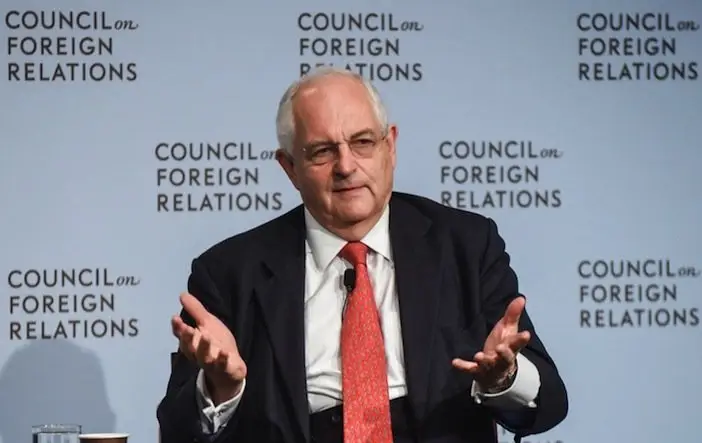
Martin Wolf is universally recognised as one of the world’s most influential writers on global macroeconomics and international finance. As the Associate Editor and Chief Economics Commentator at the Financial Times, he delivers unparalleled strategic foresight to institutional leaders, central bankers, and C-Suite executives worldwide. His proprietary analyses bridge the complex intersections of democratic governance, geopolitical fragmentation, and global market dynamics, offering a definitive compass for navigating today’s volatile economic landscape.
With a career spanning over five decades at the pinnacle of economic policy and journalism, Martin Wolf has established himself as an indispensable voice in global financial intelligence. Before his defining tenure at the Financial Times, which began in 1987 (becoming Chief Economics Commentator in 1996), he served as a senior economist at the World Bank and as Director of Studies at the Trade Policy Research Centre in London. Through these high-level roles, he developed a profound understanding of international trade, structural adjustment programmes, and the systemic vulnerabilities of globalised markets.
His rigorous intellectual contributions have earned him the highest accolades in economic journalism. In 2000, he was made a Commander of the Order of the British Empire (CBE) for his services to financial journalism. He has been awarded multiple honorary doctorates from esteemed institutions such as the London School of Economics, Nottingham University, and KU Leuven. Furthermore, he is the recipient of prestigious global recognitions including the Ludwig Erhard Prize for economic writing and the Ischia International Journalism Award. He has repeatedly been named among the world’s top 100 global thinkers by Foreign Policy magazine.
Martin Wolf is also the author of critically acclaimed books that serve as foundational frameworks for modern economic strategy:
When addressing global boards, sovereign wealth funds, and elite economic forums, Martin Wolf leverages decades of proprietary data analysis and top-tier insider knowledge. His highly sought-after keynotes focus on:
"Wolf is not afraid to express a sharp point of view, thoroughly backed up with fact. His depth of knowledge on politics, economics and environmental issues is striking, and it gives his writing a calm authority. His tone is pragmatic in the best way—firm but not strident, convincing but never shrill. And he does more than criticise—he also offers well-thought-out solutions.”

Explore the groundbreaking ideas of this leading South Korean economist, renowned for his critical analysis of global geopolitics and economic strategy.

Discover expert insights on geopolitics and foreign affairs from the UK-based Chief Foreign Affairs Columnist at the Financial Times. Read on for premier analysis of global events.

Explore the expert insights of a renowned Argentine economist and former Central Bank President. Read on to discover their perspective on economic policy and global finance.

Discover insights from a leading Spanish economics expert, renowned professor, and bestselling author. Explore their in-depth analysis of the modern global economy.

Discover insights from a leading expert on sovereign debt, exchange rates, international finance, macroeconomics, and emerging markets. Read more to explore key global economic trends.

Discover expert economic insights from the Vice President and Chief Economist of the World Bank Group. Explore the ideas of this renowned bestselling author.

Discover insights from a pre-eminent economist and thinker who analyses the global economy, geopolitics, and financial markets. Learn how these crucial forces shape our world.

Discover expert perspectives from an award-winning FT economist, acclaimed author, and renowned speaker specialising in international economics.
Meet the world-leading geopolitical speaker and founder of Eurasia Group. Discover expert analysis on global politics and international trends to help you navigate a rapidly changing world.




 England
