
Discover the remarkable work of a leading human geneticist, university professor, and bestselling author. Read on to explore their expert insights bridging science and literature.
Austria
Europe
Core Intelligence Domain: Innovation & Future Talent
Location: Vienna, Austria | Languages: German, English
Representation: Represented globally by PSpeakers Global Intelligence
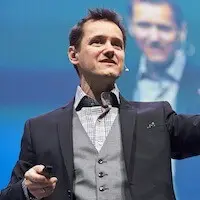
Markus Hengstschläger is a highly acclaimed geneticist, bestselling author, and a leading authority on human potential, innovation, and bioethics. As the Head of the Institute of Medical Genetics at the Medical University of Vienna, his groundbreaking research—most notably the discovery of stem cells in amniotic fluid—has secured his position at the global forefront of biomedical science. Beyond his laboratory research, Professor Hengstschläger translates complex scientific paradigms into actionable strategic frameworks for corporate leadership, focusing on how organisations can cultivate resilience and innovation in an increasingly unpredictable world.
Recognised for his unique ability to bridge the gap between hard science and corporate strategy, Professor Hengstschläger is a prominent voice in European policy and future planning. He serves as the Deputy Chairman of the Austrian Bioethics Commission and heads the prestigious think tank Academia Superior. In these roles, he advises government and industry leaders on navigating the ethical, technological, and societal shifts defining the 21st century business landscape.
Professor Hengstschläger is widely celebrated for his proprietary concepts that challenge conventional talent management and corporate structures. His number-one bestselling book, The Average Trap (Die Durchschnittsfalle), argues that focusing on improving weaknesses to achieve “average” performance stifles true innovation. Instead, he advocates for the extreme promotion of individual strengths and eccentric talents to drive progress.
Building upon this, his concept of Solution Talent (Die Lösungsbegabung) addresses the fundamental challenge of modern leadership: preparing for a future that cannot be predicted. He posits that since we cannot foresee the exact crises of tomorrow, organisations must cultivate a mindset of “possibilism” and empower individuals who possess the innate agility to generate novel solutions under pressure.

Explore the inspiring journey of the Cosmic Girls Foundation founder and astronaut trainer. Discover how she empowers the next generation of women to lead in space exploration.

Discover the insights of a leading aerospace biomedical engineering expert and former NASA deputy administrator. Explore their pioneering impact on space exploration.

Explore the remarkable life of a pioneer: an astronaut, medical doctor, inventor, and tech company CEO. Discover their journey as an aviation expert, mountain climber, and SCUBA diver.

Explore the groundbreaking work of the CERN physicist instrumental in discovering the Higgs boson. Learn how uncovering the ‘God particle’ revolutionised our understanding of physics.

Discover the groundbreaking ideas of the Transhumanist Party founder. Explore how this prominent journalist, futurist, and author is shaping the future of humanity.

Discover how this international pioneer is driving global innovation. Explore the groundbreaking ideas and forward-thinking strategies that are shaping the future.

Meet the world’s leading creator of humanoid robotics and the AI genius behind the iconic robot ‘Sophia’. Discover how this visionary is shaping the future of artificial intelligence.

Discover the incredible story of the first British astronaut launched into space and the pioneering first woman to live aboard the Mir space station.

Discover how an instigator and curator of crowdsourced technology is driving social good. Read on to learn how they are turning the impossible into reality.
Ready to future-proof your business? Unlock expert insights and actionable strategies from a leading futurist to transform your customer experience and drive growth.

Elevate your next event with the #1 speaker on the future of medicine and healthcare. Inspire your audience with captivating, high-impact keynotes, live or virtually.





 Austria