
Meet the biorobotics pioneer and ‘mother’ of OCTOPUS, the world’s first silicone robot. Discover how her inspiring journey and groundbreaking work are revolutionising soft robotics.
Asia
Singapore
Core Intelligence Domain: Robotics & Bio-Engineering
Location: Singapore & Italy | Languages: English, Italian
Representation: Represented globally by PSpeakers Global Intelligence
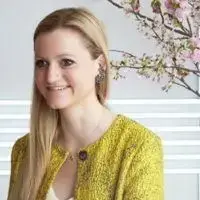
Cecilia Laschi is a globally recognised pioneer in the transformative field of soft robotics, merging biological inspiration with advanced engineering to redefine human-machine interaction and autonomous systems. As a visionary thought leader and leading academic researcher, Professor Laschi has fundamentally disrupted traditional rigid robotics by developing compliant, adaptable, and bio-inspired architectures that mimic the movements and efficiencies of living organisms.
Currently serving as a Full Professor at the National University of Singapore (NUS) in the Department of Mechanical Engineering, and acting as Co-Director of the NUS Advanced Robotics Centre, she stands at the vanguard of next-generation technological innovation. She is currently on leave from the esteemed Biorobotics Institute of Scuola Superiore Sant’Anna in Pisa, Italy, where she spent decades building one of the world’s leading research hubs for bio-inspired robotics.
Professor Laschi is most celebrated for her groundbreaking coordination of the OCTOPUS project, which successfully developed the world’s first entirely soft robot. This landmark achievement demonstrated how machines could dynamically adapt to unpredictable environments, paving the way for revolutionised applications in marine exploration, medical surgery, manufacturing, and collaborative human-robot spaces. Her proprietary frameworks in morphological computation and bio-inspired design have positioned her as an elite advisor for organisations seeking strategic foresight into the future of automation.

Discover expert insights from Renault’s CSO and AI Leader, the co-creator of Siri, former HP CTO, and bestselling author of “Artificial Intelligence Does Not Exist”.

Meet the award-winning AI and robotics expert, and visionary co-founder of Open Bionics. Discover how their ground-breaking work is shaping the future of technology.

Meet the ‘Mother of Robots’. Discover how this pioneering entrepreneur and advisor is advocating for diversity and combating bias in AI. Read her inspiring story.

Discover the story of the ‘Father of Artificial Intelligence’, a groundbreaking pioneer whose innovations revolutionised the field of deep learning.

Meet ‘Hand Solo’, an inspiring innovator who builds and wears his own customised arm prosthetics using LEGO. Discover the remarkable story behind his creative and life-changing designs.

Meet the world’s leading creator of humanoid robotics and the AI genius behind the iconic robot ‘Sophia’. Discover how this visionary is shaping the future of artificial intelligence.

Discover ‘The Future of Healthcare’ with the world’s #1 digital healthcare expert. Explore the vital relationship between human cognition and Artificial Intelligence.

Discover how the most-watched surgeon in history is revolutionising healthcare through the groundbreaking fusion of modern medicine and cutting-edge technology.

Explore groundbreaking insights from the world’s leading authority on Artificial Intelligence at Oxford University. Discover how their cutting-edge research is shaping the future of AI.
Discover a leading emerging tech speaker sharing expert insights on AI, robotics, virtual reality, and data analytics. Explore how these cutting-edge innovations are shaping our future.




 Asia
Asia